
Establishing Australian Fertiliser for supply chain resilience
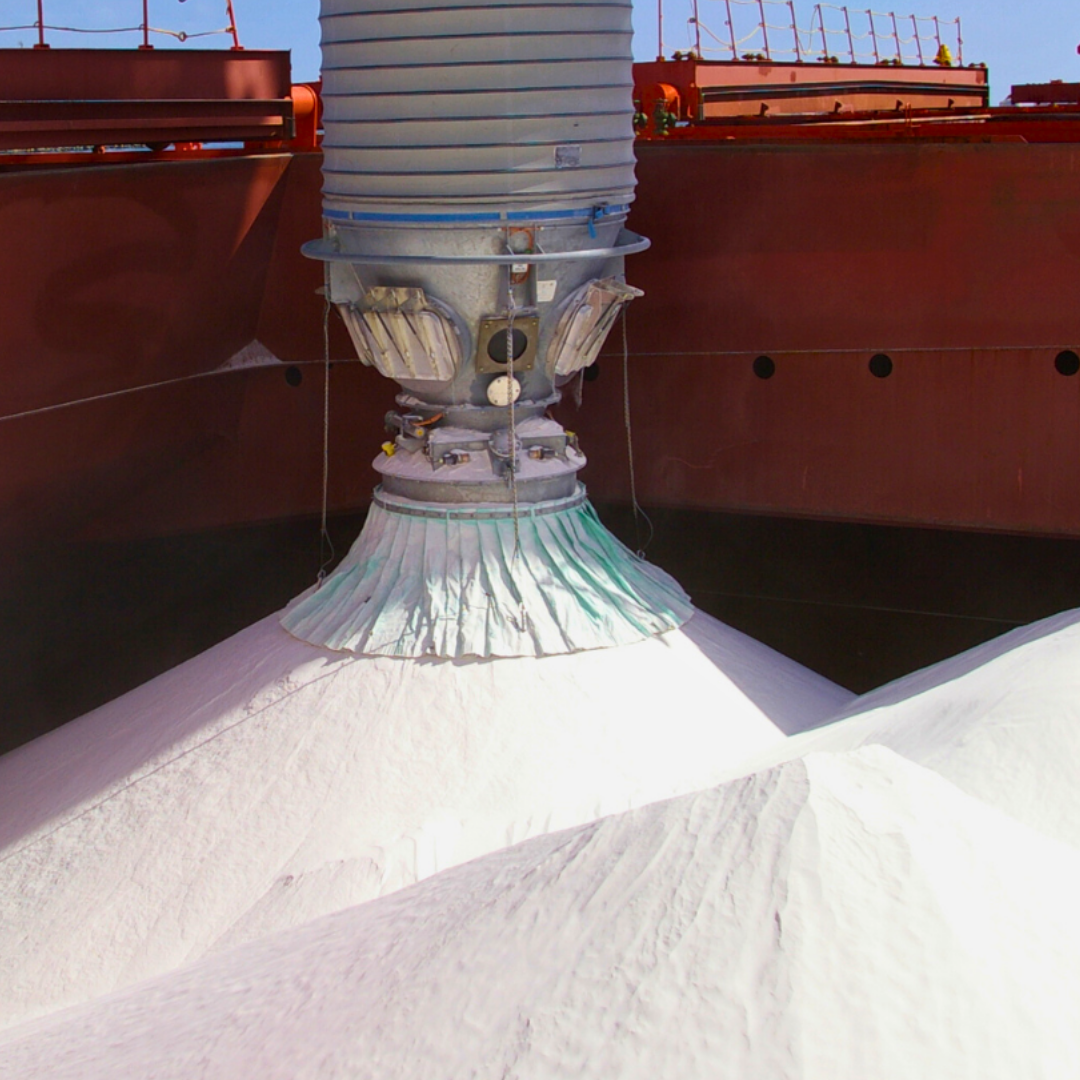
Global conflicts have driven fertiliser prices five-fold higher, with the Russia-Ukraine war disrupting the world’s ammonia supply and Middle East tensions threatening the critical Strait of Hormuz shipping lane. Australia currently imports nearly all of its nitrogen fertiliser, leaving cotton, grains, and horticulture growers completely exposed to these international shocks and volatile costs.
Green ammonia eliminates this vulnerability by harnessing Australia’s world-leading solar and wind resources to produce fertiliser locally. Powering Australia’s HORIZON 2035: Decarbonising Australia’s heavy industry identifies green ammonia as the standout opportunity within our broader heavy industry transformation. The report’s Focused Ambition scenario, which models the impact of strong policy support and industry coordination, demonstrates that Australia can replace a 90% import reliance, cut agriculture’s 34% share of national emissions, and deliver A$23 billion in economic value alongside 20,700 jobs.
Why green ammonia solves Australia’s fertiliser challenge
Farmers have endured 300% price increases since 2020 as global ammonia swung from US$300 to US$600 per tonne to crisis peaks. With 15% of the world’s supply flowing through geopolitically sensitive regions, supply disruptions remain a constant threat. Green ammonia addresses both issues. Solar panels and wind turbines power water splitting to create green hydrogen, which is combined with nitrogen from the air to produce chemically identical ammonia manufactured right here in Australia. Each tonne replaces imported fertiliser while eliminating 1.2 tonnes of carbon emissions, directly supporting farm sustainability goals.
This addresses Australia’s core vulnerability, given that our annual demand of 425,000 tonnes currently arrives by ship at unpredictable prices. Local production delivers cost stability for growers while creating a new export industry for Asia’s decarbonising agriculture markets.
Australia’s green ammonia projects are ready
Nineteen low-carbon ammonia projects are advancing nationwide, with five in detailed engineering and one already under construction. Western Australia’s Murchison Hydrogen project leads the pipeline with six gigawatts of solar and wind capacity destined to power 1.9 million tonnes of ammonia annually for Asian markets. The project is backed by funding from the federal Hydrogen Headstart program, with detailed engineering work starting next year.
Near Karratha, Perdaman’s A$6.4 billion Ceres urea plant targets 2.3 million tonnes of annual production by 2027 with net-zero ambitions by 2050. Meanwhile, the Yuri project proves commercial readiness through its 10-megawatt electrolyser feeding Yara’s Pilbara fertiliser operations.
These projects cluster in solar-rich regions beside deep-water export ports, perfectly positioned to serve domestic farmers first and then meet Asia’s policy-driven demand from Japan and Korea. Co-location with renewable energy sources minimises costs while maximising production efficiency.
Making green ammonia cost-competitive
Green ammonia costs US$1,170 per tonne today versus grey ammonia’s projected US$500 to US$1,000 range by 2035, with hydrogen comprising 60% of total production costs. Australia closes this 40% gap through proven industrial strategies. These include 10% cheaper renewable electricity from solar and wind co-location, 10% construction savings via shared roads, ports, and power infrastructure, 10% operating savings from placing factories directly beside energy sources, and federal hydrogen production tax incentives.
Hybrid factories bridge the transition, starting with natural gas while progressively increasing the green hydrogen share as renewable costs fall. This strategy spreads massive upfront investment while proving commercial viability. By 2035, green ammonia matches imported grey product pricing even after accounting for carbon costs.
Industrial sovereignty
The findings from the HORIZON 2035: Decarbonising Australia’s heavy industry analysis show that green ammonia could entirely reshape Australia’s industrial landscape. Under the modelled Focused Ambition scenario, the sector becomes a major pillar of the national economy, delivering stable fertiliser pricing for farmers, helping miners meet emissions targets, and establishing a major clean export industry for Asia.
The independent modeling reveals a stark choice for Australia’s industrial future. A business-as-usual approach stalls the industry at just 1% of its potential, leaving regional communities with negligible job growth and keeping our agricultural sector permanently exposed to overseas supply shocks.
Accelerating a coordinated shift to green ammonia changes the equation entirely, scaling Australia’s local production capacity 40 times higher than that baseline projection. This trajectory positions the nation to replace unpredictable import dependencies with sovereign manufacturing leadership, securing our food production and regional prosperity for generations.
To learn more about how HORIZON 2035: Decarbonising Australia’s heavy industry maps this complete transformation, as well as opportunities in green iron and green aluminium, download the report using the link.